
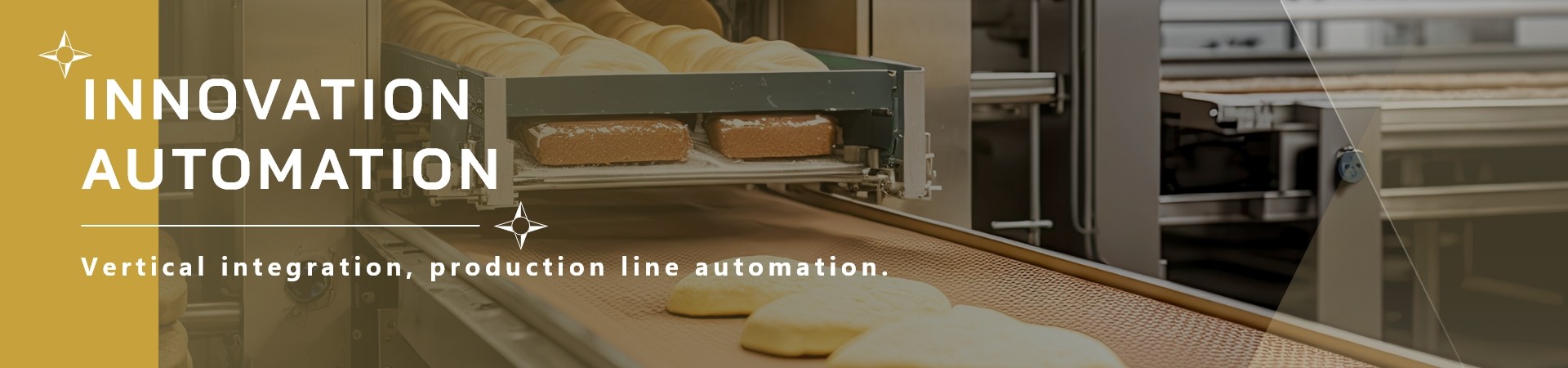
When evaluating bakery automation, many business owners have the same concern: "With so many product varieties and complex recipes, can automation really handle it?"
In practice, a mature automated bakery line goes beyond mere speed; it excels at maintaining stable quality and minimizing human error even with high-diversity production, high hydration doughs, and complex filling requirements. As production scales up, true competitiveness comes from the ability to ensure "every single product is identical,"rather than just"occasionally excellent."
I. Clarifying Product Types Before Implementing Bakery Line Automation
The reason many automation implementations fail is often not due to equipment issues, but because of taking the wrong perspective from the very beginning. In actual production, bakery products vary significantly, including factors such as:
- Recipe and Hydration Levels
- Whether it is Filled (Encrusted)
- Forming Methods and Appearance Requirements
- Fermentation and Downstream Tray-Arrangement Needs
If even one of these conditions is not integrated into the production line planning, the system may still "run," but it will likely suffer from instability during mass production.
II. Automation Solutions for Common Breads and Filled Pastries
| Product Type | Common Examples | Key Challenges in Mass Production | Automation Planning Focus |
|---|---|---|---|
| Basic / Daily Bread | Butter bread, dinner rolls, toast, bi-color toast | Cumulative weight errors during long production runs | Precise dividing, stable pacing, and reducing manual dividing errors |
| Filled / Stuffed Bread | Red bean bread, cream bread, pineapple (bolo) buns, apple bread | Inconsistent filling amounts and amplified appearance variations | Dividing precision, filling ratio control, and appearance consistency |
| Rolled / Shaped Bread | Tortillas, hot dog buns, croissants, horns | Deformation after forming; downstream tray-arrangement issues | Forming stability, and seamless transport-to-arrangement integration |
| European / High-Hydration Bread | Baguettes, artisan bread, berry and raisin bread | Dough structure easily damaged; inconsistent baking results | Dough tension control, gentle forming, and room for adjustment |
| Snack / Extended Products | Pizza crusts, donuts, bagels, burgers | Long changeover times and numerous mold constraints | Modular design, rapid changeover, and forming flexibility |
III. The Top 3 Common Challenges in Bakery Production Line Automation
Even if a product is suitable for automation, many bakery factories still encounter these three critical bottlenecks during implementation. If these issues are not addressed during the planning stage, they tend to amplify after mass production begins, affecting overall stability.
Common Bottlenecks in Bakery Automation × Corresponding Planning Focus
| Common Challenges | Actual Mass Production Scenarios | Key Planning Strategies |
|---|---|---|
| Inconsistent Dough Characteristics | Differences in recipe, fermentation, and ambient temperature amplify into weight deviations, sticking, or line jams during high-speed production. | Incorporate control from the initial forming stage; equipment must offer adjustable sheeting, thickness, and feeding conditions to absorb dough fluctuations. |
| Precision in Dividing and Filling Viscosity | Unstable filling amounts and appearance deviations, affecting downstream forming and overall consistency. | Filling must be controllable and adjustable to prevent changes in filling fluidity from directly impacting final product quality. |
| Sanitation and Hygiene Management Pressure | Products with high oil, sugar, or stickiness lead to prolonged cleaning times, reducing actual production hours. | Evaluate disassembly access and cleaning workflows during the planning phase to minimize the impact of downtime on throughput. |
IV. How Yang Jenq Addresses the 3 Major Challenges of Bakery Automation
When implementing production lines for bread and filled pastries, the issues many factories face are often the three key bottlenecks mentioned previously. When planning bakery production line automation, Yang Jenq does more than just provide equipment; we proactively plan for these common challenges during the implementation phase.
Addressing Challenge 1 | Inconsistent Dough Characteristics
To handle dough fluctuations caused by recipes, fermentation, and ambient temperatures, Yang Jenq helps evaluate dough hardness, hydration ratios, and feeding conditions based on product characteristics. We recommend forming configurations with adjustable sheeting and thickness, allowing the equipment to absorb raw material variations during high-speed mass production and preventing weight deviations or line jams.
Addressing Challenge 2 | Precision in Dividing and Filling Viscosity
For filled and high-sugar products, Yang Jenq assists in verifying filling viscosity and fluidity conditions before implementation. We adjust filling methods and parameter settings to prevent changes in filling characteristics from directly impacting product weight and appearance, ensuring consistency in mass production.
Addressing Challenge 3 | Sanitation and Hygiene Management Pressure
For products with high oil, sugar, or stickiness, Yang Jenq helps evaluate equipment disassembly access and cleaning workflows during the planning stage. We provide proactive operation and cleaning training to reduce the risk of compressed throughput caused by time-consuming cleaning after production begins.
Through the support mentioned above, Yang Jenq not only assists in the smooth implementation of equipment but also helps factories establish a bakery production line automation system capable of stable, long-term operation.
Related Page: Bakery Production Line Introduction
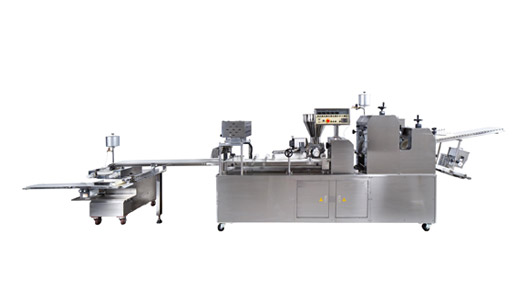
V. FAQ
FAQ 1 | With many items and diverse recipes, is it truly suitable to implement bakery production line automation?
Yes, provided that the automation planning is based on product types and processing conditions.
A high variety of items is not an issue; the key lies in whether enough adjustment flexibility is reserved for different hydration levels, filling requirements, forming methods, and fermentation needs. If a production line is forced to fit a single equipment specification, instability is likely to occur during mass production.
FAQ 2 | Why does quality sometimes become unstable after automating a bakery line?
In most cases, this is not due to equipment failure, but rather a failure to address the variability of dough and fillings during the planning stage.
When recipes, ambient temperatures, or fermentation states change, if the equipment lacks a design to absorb these fluctuations, these differences are amplified during high-speed production, leading to weight deviations, poor forming, or frequent adjustments that affect overall stability.
FAQ 3 | What is the most important thing to consider before implementing bakery equipment automation?
It is not about choosing the equipment first, but clarifying "which products need stable mass production."
By starting with product structure, daily output, recipe characteristics, and actual workflows, you can determine the appropriate equipment configuration and automation methods, preventing situations where the equipment "runs" but the production line cannot sustain the operation.